LIXIL Surpasses 100 Million People Reached With SATO Sanitation Solutions
Key Highlights
-
10+ million SATO sanitation and hygiene units shipped across 59 countries and territories
-
Market-based social business model driving sanitation access in Africa and Asia
-
Next-phase 2030 targets aimed at accelerating universal WASH access
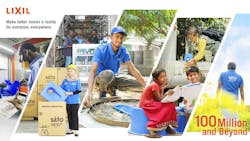
TOKYO, JAPAN — LIXIL Corporation (TSE: 5938) announced it has achieved its goal of improving sanitation and hygiene access for 103 million people worldwide—the primary target under the Global Sanitation and Hygiene pillar of its Impact Strategy.
The milestone reflects the distribution of more than 10 million SATO toilet and hand hygiene products across 59 countries and territories, reinforcing LIXIL’s commitment to expanding safe, affordable sanitation through market-based models.
Global Sanitation Gap Remains Urgent
Despite progress, sanitation and hygiene access remains one of the world’s most pressing infrastructure challenges.
An estimated 3.4 billion people still lack safely managed sanitation. Approximately 354 million people practice open defecation, and 1.7 billion lack basic hygiene services at home. The health consequences are severe, with more than 1,000 children under age five dying each day from diseases linked to unsafe water, sanitation and hygiene.
Beyond public health, inadequate sanitation systems drive economic losses totaling hundreds of billions of dollars annually through reduced productivity and increased healthcare costs. By contrast, each $1 invested in sanitation generates an estimated fivefold economic return.
SATO Social Business Model Scales Market-Based Solutions
LIXIL’s progress is driven by SATO, its social business platform focused on delivering affordable sanitation and hygiene technologies to underserved communities.
SATO products are predominantly deployed in sub-Saharan Africa and South and Southeast Asia. In addition to household installations, the solutions extend into schools, healthcare facilities and humanitarian settings, including refugee camps.
By combining product innovation with localized distribution networks, SATO has helped stimulate sanitation markets in emerging economies—supporting local entrepreneurs, masons, manufacturers and retailers while expanding access to essential infrastructure.
“Reaching 103 million people is not a finish line, but powerful proof that the private sector plays a critical role in addressing an urgent global issue.” said Kinya Seto, CEO of LIXIL. “While LIXIL is renowned for high-end innovations, we take equal pride in our affordable SATO solutions. By establishing a social business, we are addressing the sanitation and hygiene challenges at scale, not only improving health, but empowering families with security and peace of mind they deserve to build their livelihoods and prosper.
"Our journey is one of learning and partnership. We are grateful to the families and partners who have welcomed our solutions into their homes and communities. Seeing first-hand how simple, safe toilets can restore dignity and improve quality of life deepens our commitment. Our role is to serve as a catalyst, supporting the resilience and potential of every community we reach.”
Partnership With UNICEF Strengthens Delivery Model
A cornerstone of the initiative is the “Make a Splash!” collaboration with UNICEF—the organization’s first global shared-value partnership focused on water, sanitation and hygiene (WASH), and its first such partnership with a Japanese company.
The partnership integrates LIXIL’s product development and supply chain expertise with UNICEF’s sanitation programming and community-based behavior change initiatives. Together, the collaboration aims to establish resilient, self-sustaining sanitation ecosystems in both urban and rural communities.
2030 Targets Signal Next Phase of Impact Strategy
With the 103 million milestone achieved, LIXIL is preparing to advance its next set of 2030 targets aligned with global universal access goals.
“Reaching 100 million people is a significant milestone, representing the impact on individuals and communities, and it is also a vital transition point,“ said Erin McCusker, Leader of SATO. “ The global goal of universal access to safe sanitation and hygiene by 2030 demands unprecedented acceleration. We see sanitation as a foundation for the achievement of many other development goals. LIXIL’s upcoming 2030 targets will reinforce our commitment to deliver private-sector innovation and market-driven models essential to making better homes a reality for everyone, everywhere.”
1: Results are preliminary and subject to minor change based on partner reporting received in Q4 of FYE2026 (March 31, 2026). To learn more about the results, please visit www.lixil.com/en/impact/sanitation/sanitation_detail.html.
2: The WHO/UNICEF Joint Monitoring Programme for Water Supply, Sanitation and Hygiene 2000-2024
3: The WHO/UNICEF Joint Monitoring Programme for Water Supply, Sanitation and Hygiene 2000-2024
4: The WHO/UNICEF Joint Monitoring Programme for Water Supply, Sanitation and Hygiene 2000-2024